The concept of cosplay is reliant on the development of mass or popular culture and, in some cases, the concept of fandom. There are many aspects of cosplay history that are debated, especially the earlier you go, due to the blurry lines between regular costume and cosplaying specifically. The information I found and decided to compile into this timeline has gone through my own lens of what I feel and understand to be cosplay as an active cosplayer. Because of this, there may be events I missed or didn't include but could be argued to be a part of the timeline. Additionally, I chose to focus most of the history on the development of cosplay in the USA because that is the lens I have.
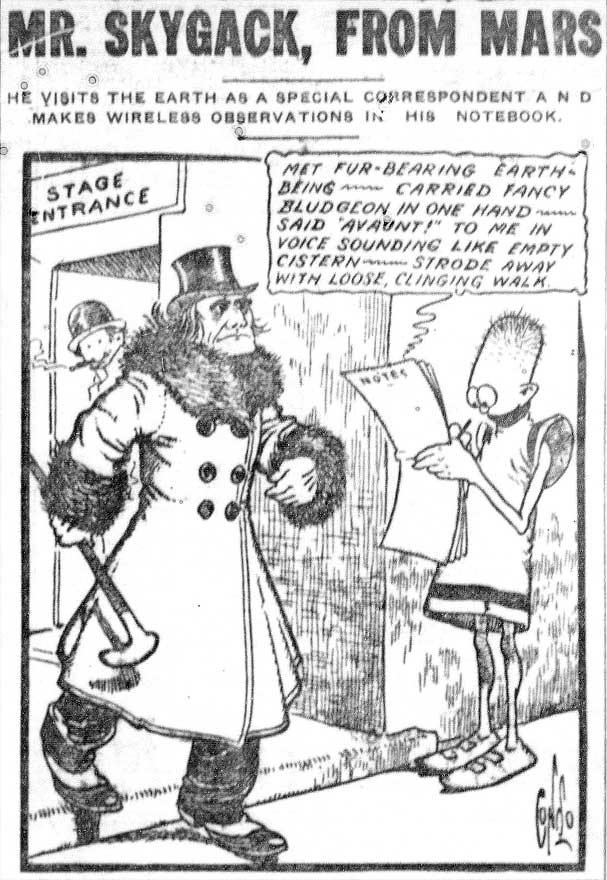
William Fell dressed as Mr. Skygack of Mars to a masquerade. The character is from, what is considered, the first science fiction comic titled Mr. Skygack, from Mars by A.D. Condo. published in the Chicago Daybook newspaper from 1907 to 1917.1
A panel of Mr.Skygack from Mars. Source: Barnacle Press
Forest "Forry" J Ackerman and Myrtle "Morojo" Douglas dress in costumes based on the 1936 film Things to Come while attending the first Worldcon (World Science Fiction Convention) in New York. Ackerman was a pioneer of sci-fi fandom and coined the term "sci-fi" in 1954.1
Forest "Forry J Ackerman and Myrtle "Morojo" Douglas in their Things to Come cosplays. Source: Pat and Peggy Kennedy Memorial Library
The original Star Trek series aired for the first time and ushered in a new era of fandom. This included Star Trek specific conventions where fans regularly dressed as their favorite characters to attend. 1
The flyer for the first Star Trek convention in 1972. Source: Fanlore
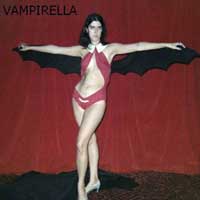
An early recorded instance of a comic book character cosplay occurred at Worldcon in St. Louis. Kathy Bushman dressed as Vampirella from the character titled comics, helping to create the strong association between comic book culture and cosplay.2
Kathy Bushman was the first recorded person to cosplay Vampirella. Source: Vampilore
Shel Dorf held a one day comic convention in San Diego named "San Diego's Golden State Comic-Minicon." This event would later be extended to a three day event and renamed to "San Diego Comic Con." This comic convention has become one of the largest comic conventions in North America and one of the most widel recognized comic conventions globally.3
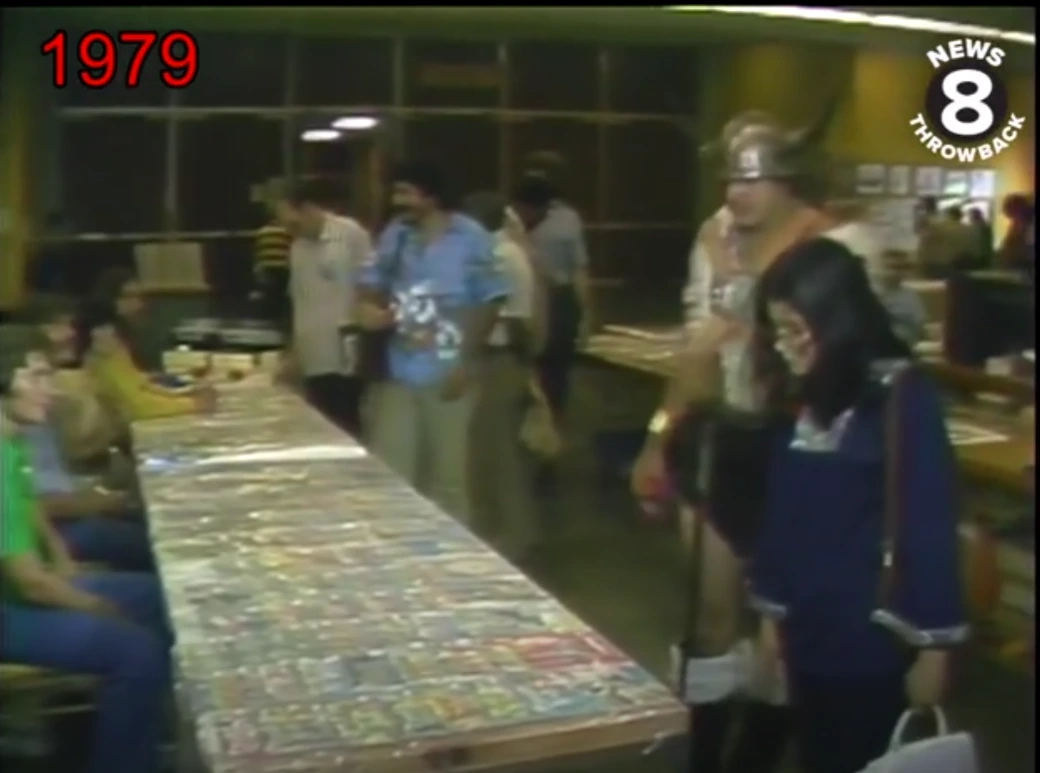
Anime characters notably appeared at the 1979 San Diego Comic Con with the still niche, but growing rise of Japanese animation in the United States. Characters from the animes Star Blazers and Space Pirate Captain Harlock were seen in the convention's masquerade.2
Denver Worldcon established the first standardized rules for judging costume craftsmanship and a "three-tiered skill division" for contestants to enter into.1 This structure has become the basis for practically all cosplay competitions today from local hotel conventions to global competitions.
The term "cosplay" was first introduced to the US audience and coined by Nobuyuki Takahashi. It was used in an article he wrote for the June 1983 issue of the magazine My Anime that was originally in Japanese and translated to English.2
A scan of a portion of the original article where "cosplay" was first published. Source: Studio Hard
It is believed that international cosplay contests began in Brazil with the 2001 Yamato Cup.1 This international competition still occurs to this day and continues to draw in contestants from around the world.
A social media post showcasing the top three contestants at the 2025 Yamato Cup. Source: Yamato Cosplay Cup Facebook
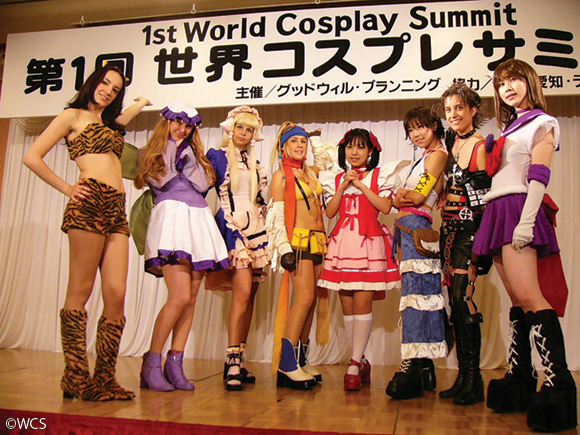
The first World Cosplay Summit is held in Nagoya, Japan. The formation of the competition is said to be because a group of Japanese cosplayers were inspired by the appreciation of "Japanese otaku culture" in other countries.1 The summit is still held today with cosplayers regularly competing to represent their respective countries.1
A photo from the first World COsplay Summit where cosplayers from France, Germany, and Italy were invited. Source: World Cosplay Summit
1 Lunning, F. (2022). Cosplay : The fictional mode of existence. University of Minnesota Press. 2022. ProQuest Ebook Central, https://ebookcentral.proquest.com/lib/ucdavis/detail.action?docID=6899989. 2 Mountfort, P., Peirson-Smith, A., & Geczy, A. (2018). Planet Cosplay: Costume Play, Identity and Global Fandom. Intellect. https://doi.org/10.2307/j.ctv36xvxb4 3 Wikimedia Foundation. (2026, March 6). San Diego comic-con. Wikipedia. https://en.wikipedia.org/wiki/San_Diego_Comic-Con