Beginner's Cosplay Guide
I've been cosplaying for a while now, but I'm no professional or master. Honestly, I'm too scared to even compete! But, I love challenging myself and learning new cosplay skills and I want to share my experience with others to help support new cosplayers and the community. Everything in this guide is based on my own experience, so if there's anything you think I missed or if you have any other comments, feel free to comment in my guestbook and I'll see if I can help direct you elsewhere!
Setting your goals is a little trickier as it's easy to get overly ambitious, especially if you're excited to start. To counteract this, I like to set very simple goals and small, flexible, or arbitrary deadlines that feel very achievable and have little to no consequence if I can't achieve them. This can take the form of creating a goal for how long you work on your project in a week, wanting to complete a specific cosplay piece within a particular time frame, or picking a random date you want to accomplish a small task by. Overall, the main point of setting goals is to help create tangible "checkpoints" for your project so you can stay on track, organize your process, and maintain morale.
Picking a character to cosplay can be motivated by so many different reasons. I personally have chosen characters because they're my favorite in a series I love, because I want to challenge myself by making a complex design, or even because I find them funny and I think it would be funny to cosplay them. Regardless of why you choose a character, your reasoning should help keep you excited to work on your build and it is important to keep in mind the level of difficulty you will be engaging in once you make your decision. For a beginner, choosing a character you love but has a very basic design, or basic alternate outfit, is the simplest way to go about this.
Here are some characteristics of a design I would consider more simple:Clothing can be easily bought rather than madeCharacter's clothes can be easily replicated through simple modifications/upcyclingProps have basic shapes and few intricate detailsShoes are easily bought or can be modifiedMinimal accessoriesHairstyles would not require many techniques to create on a wigMakeup is not complex (little to no body paint, no intricate scars/tattoos/etc., no sculptural special effects makeup, etc.)
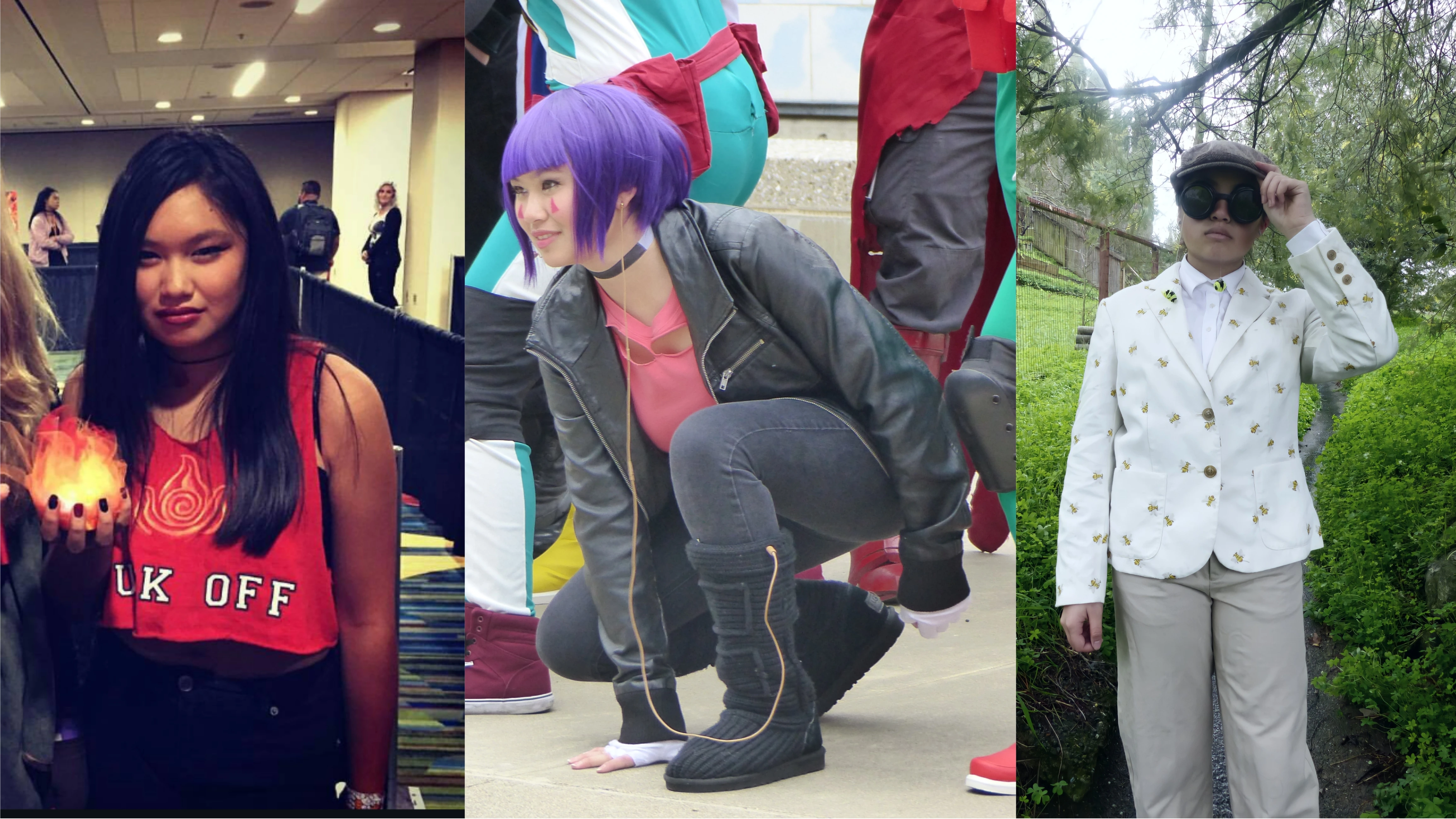
Some early cosplays of mine that have very simple outfits. Left: My first ever "cosplay" of an original modern firebender(from Avatar the Last Airebender) design. I only upcylced the shirt and made the fire prop. Middle: Kyoka Jirou from My Hero Academia. I thrifted and modified everything except the wig. Right: Hugh Apiston from Miss Peregrine's Home for Peculiar Children. I bought and thrifted and only modified the goggles.
Characters like Marceline from Adventure Time, Sofia Bicicleta from Dimension 20: Unsleeping City, or Soul Evans from Soul Eater are some examples of characters with simpler outfit options for recreating. If you have some experience with costume fabrication or crafting, take into consideration what kinds of projects you've done in the past and use those experiences to decide if increasing complexity seems feasible. These considerations don't just make your process easier, but picking something that is reasonable for you to accomplish as your first project makes you less likely to become discouraged if issues arise.
There are many times where I have started a cosplay with lots of energy and motivation only to put it on hold for months, or even years, because I hit a roadblock with a certain component. The increased time and energy I needed to put into problem solving disrupted my flow and I grew more easily frustrated. Experiencing a high level of frustration right off the bat could easily turn you off from a project or cosplay as a whole so you want to set yourself up for future success!
No matter what creative hobby or art form you choose, making something for the first time can be daunting, especially if you plan to show off the finished product! As you start planning and fabricating your first build, it's crucial to understand that you're trying something new, and maybe even for the first time. And with any new creative skill, the final product could end up imperfect but you should never beat yourself up over it. It is an incredible thing to learn new skills and part of the process requires failing, otherwise how will you learn? Make sure as you're making your first cosplay build, you keep the joy of creation at the forefront and understand your cosplay may not come out perfect; I know many of my first cosplays didn't...
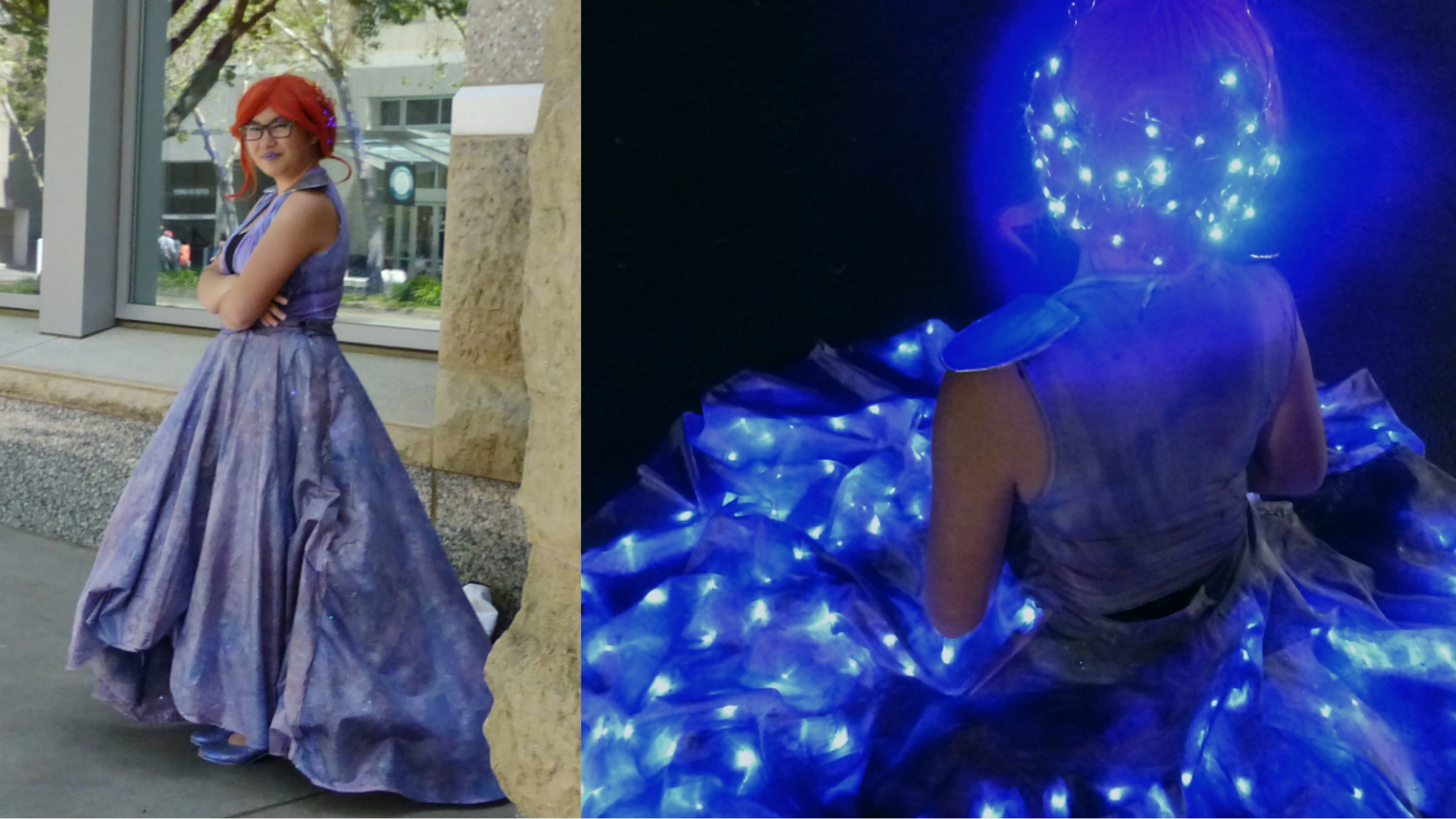
This Elle Wittimer from Geekerella cosplay was my first ambitious build. I made so many mistakes on it like using the wrong kind of dye, sewing the underskirt wrong, uneven and messy seams... But I still loved it so much. At the time my social media handle was even "geekerellacos".
It's nice when your cosplay comes out looking good, but the most important part is having fun making and wearing it!
Oftentimes, when someone thinks about cosplaying, they don't think about the long hours of planning and research that must be done before you even start a build. Planning can be quite unintuitive and overwhelming with trying to figure out how to start and how to organize all of the information. The way each cosplayer likes to plan can be very different so I can only speak on my experience and will mostly be detailing my method in this section.
When I first started cosplaying, my planning method was very disorganized. Sketches, notes, and references were scattered across tabs I never closed, my phone's notes app, and random notebooks. With time, I eventually figured out my preferred method of organization.
There are many options including using cosplay specific planning apps like Cosplanner or the Cosgear Cosplay Planner app, a plain physical journal, a specially formatted journal for cosplay planning, Excel, and many more. Different methods also have different strengths depending on the way you like to work on your project and track your progress.
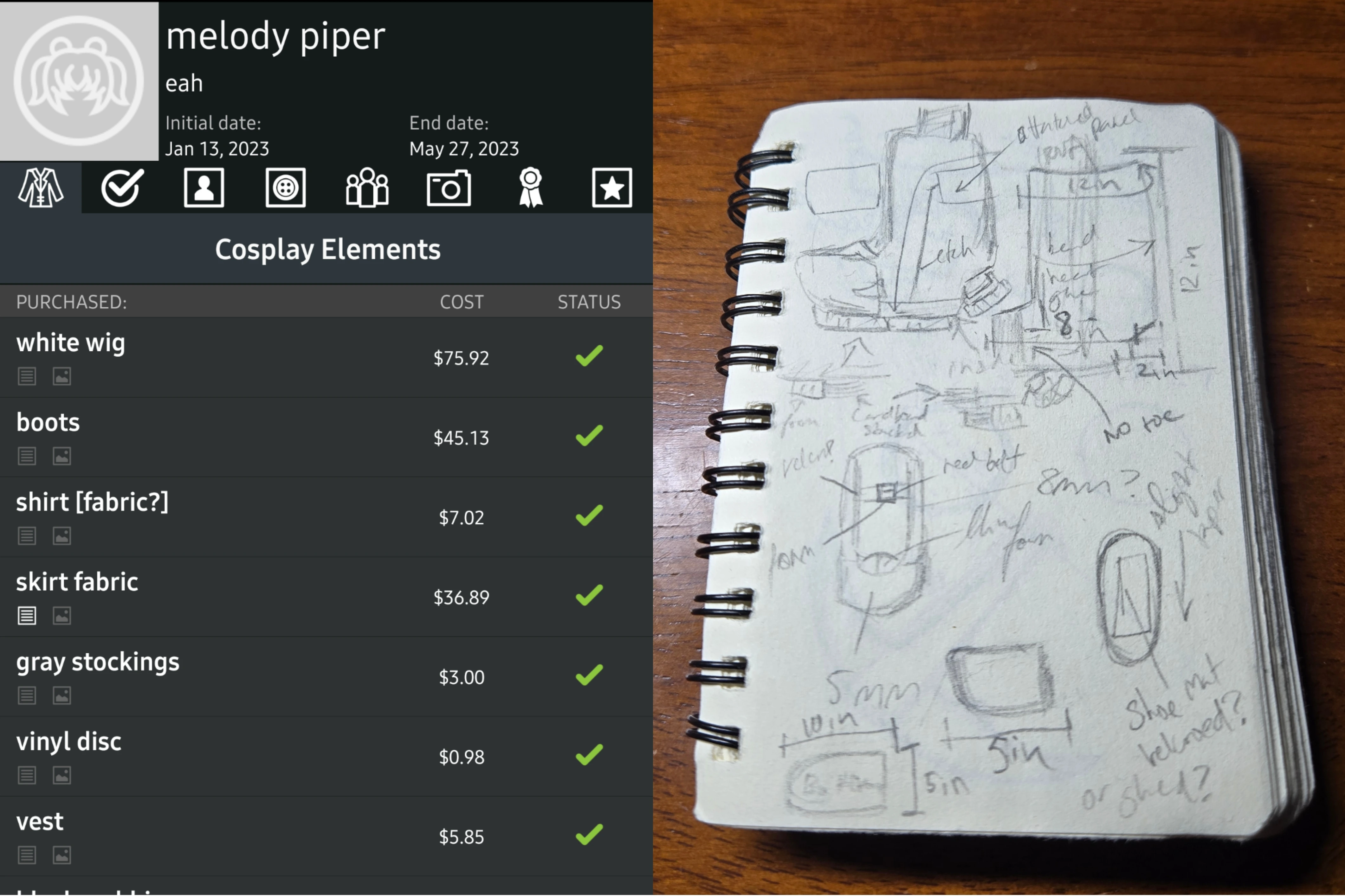
The different methods I use to plan cosplays. Left: A screenshot of my Cosplanner app. Right: A picture of a "blueprint" sketch of my Mei Hatsume boots.
Nowadays, I like to mainly use the Cosplanner app along with a variety of physical journals. I keep all of my reference images, to-do list, progress tracking, and supply list on the app while I keep sketches, blueprints, notes, and measurements in journals.
Once you figure out how you will log your project, it is time to identify what you will need to buy or make as well as consider your time and budget. These are decisions that can vary person to person so I will describe my process to show how it can be done and use Marceline, from Adventure Time, as an example.
When I first look at a character design that I want to cosplay, I like to first break down the outfit. I identify each piece of clothing and accessory to decide whether I want to make it or buy it or even opt out of including it. I also consider any special undergarments or special shapewear, such as a chest binder, I would want to wear to look closer to the character. In the case of my Marceline cosplay, I was in high school so it needed to be low budget. It was also a very early cosplay of mine so I didn't have strong fabrication skills. Still, I wanted to include all of the components of her look in my cosplay so I decided to purchase clothing that matched her outfit. For the shoes, I didn't want to buy a pair of dedicated shoes for the cosplay, so I sewed boot covers that I could wear over heeled shoes I already owned.
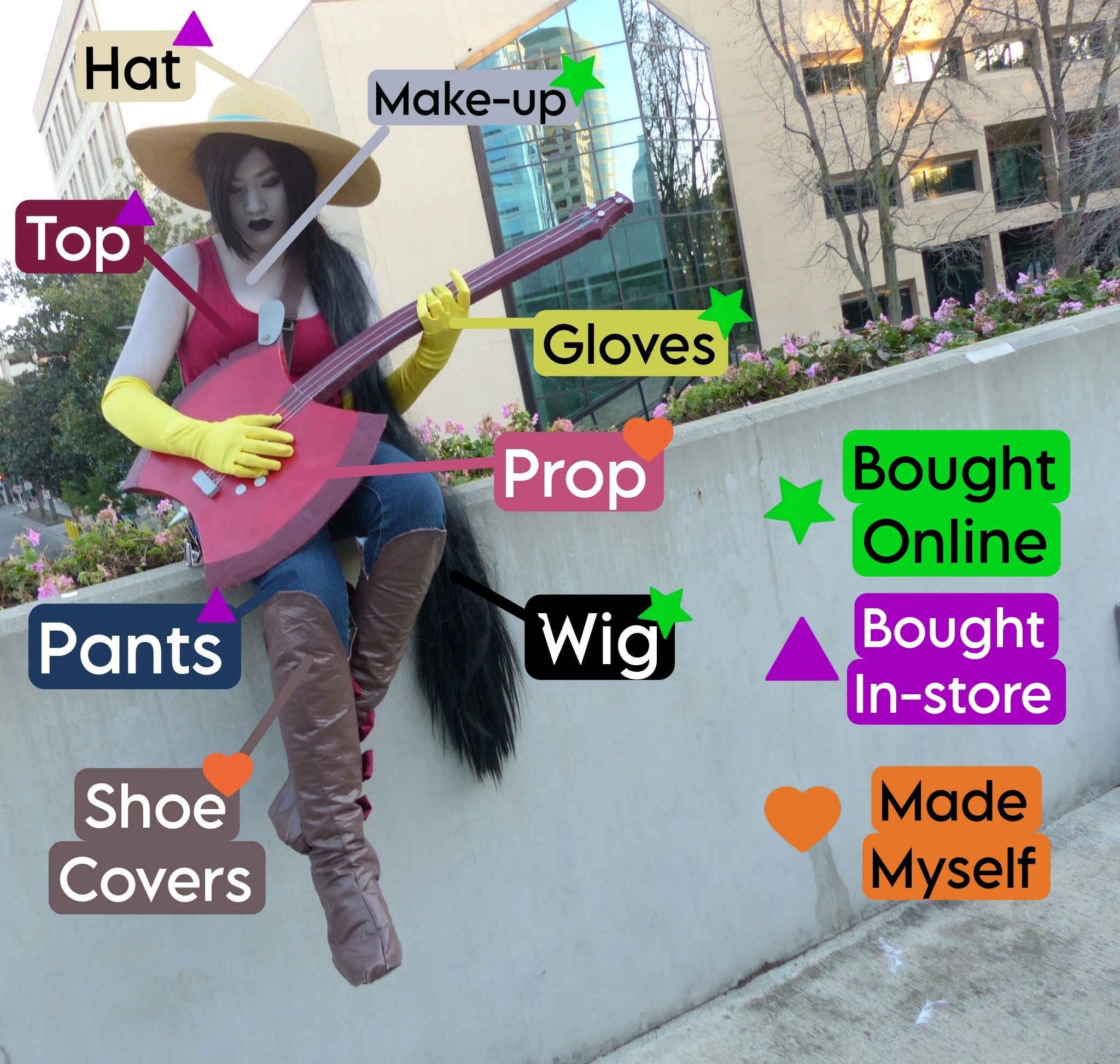
As an example, here is a breakdown of every component I considered for my Marceline cosplay and if I made or bought it.
After looking over the outfit, I then like to examine any props to decide if I want to make or buy them. If you want to buy a prop, oftentimes you would need to commission a prop maker to make it which requires searching for a maker who has commissions open and doing research to see if they are reputable. If you plan to make a prop, you will need to research what prop making technique you want to use, what materials you will need, and where to buy them. For the Marceline cosplay, I decided to make her axe bass using EVA foam.
The part I often leave for last is the make-up and wig. For makeup, the main basic considerations to think about are: Do I have the type of make-up in the correct or similar colors for the character? Do I want to use body paint if the character has a fantasy skin tone? Am I willing to buy any make-up I don't already have and want to use?
If I don't have the correct type or colors, I often just try to work with what I have but you can decide to buy new make-up, especially if you're just starting and have little to no products as is. Body paint isn't necessary, but can be fun for taking a cosplay to the next level. Marceline's make-up is minimal so I already had a few of the products needed in my limited collection at the time. But I wanted to do body paint for her so I put that on my list to buy along with other products I was missing.
For the wig, I first look at the catalog of what's available on various websites to see if I would be able to get a wig already like the hair of the character. From there, I consider the color options I like and how much I would need to style each potential option. Marceline's hair has no intensive styling required but I made sure to buy an extra long wig because I wanted that dramatic length.
Ultimately, in your plan, it is up to you to decide what components you want to make and what you don't want to include. Comfortability should be a priority in any cosplay and you should never feel pressured to wear something you don't want to.
Now that we've gone over the planning process, we can dive deeper into why cosplayers may choose to include a component and resources for each. But because I am a USA based cosplayer, many of the resources/suppliers I will mention are based in the US or I can only be confident that they serve the US; some companies may serve other countries but I cannot confirm that
So many fictional characters have unique hair styles and colors and if you want to dress up as one, a wig can help you achieve that look without sacrificing your hair. Wigs can also be permanently styled, easily changed, or reused for many different characters. They also help balance some of the other fantastical elements of a cosplay which is important for creating a cohesive look. Most wigs used by cosplayers are synthetic which means the fibers are made from strands of plastic and they are often purchased online. There are many resources that will show you how to style wigs in various ways such as cosplay blogs like Wigs 101 by Kukkii San, tutorial books such as The Art of Extreme Wig Styling, or in videos and posts on social media like YouTube. If you decide to attend a comic or anime convention, there may also be panels run by other cosplayers teaching you how to style wigs (or even any other maker's skill).
Dedicated websites to buy new wigs:Epic Cosplay WigsFive Wits WigsArda WigsPose WigsLucaille
Wigs can also be found on general online marketplaces, such as Ebay, or secondhand from places like Lumikha Cosplay Resale, dedicated facebook groups, and Mercari.
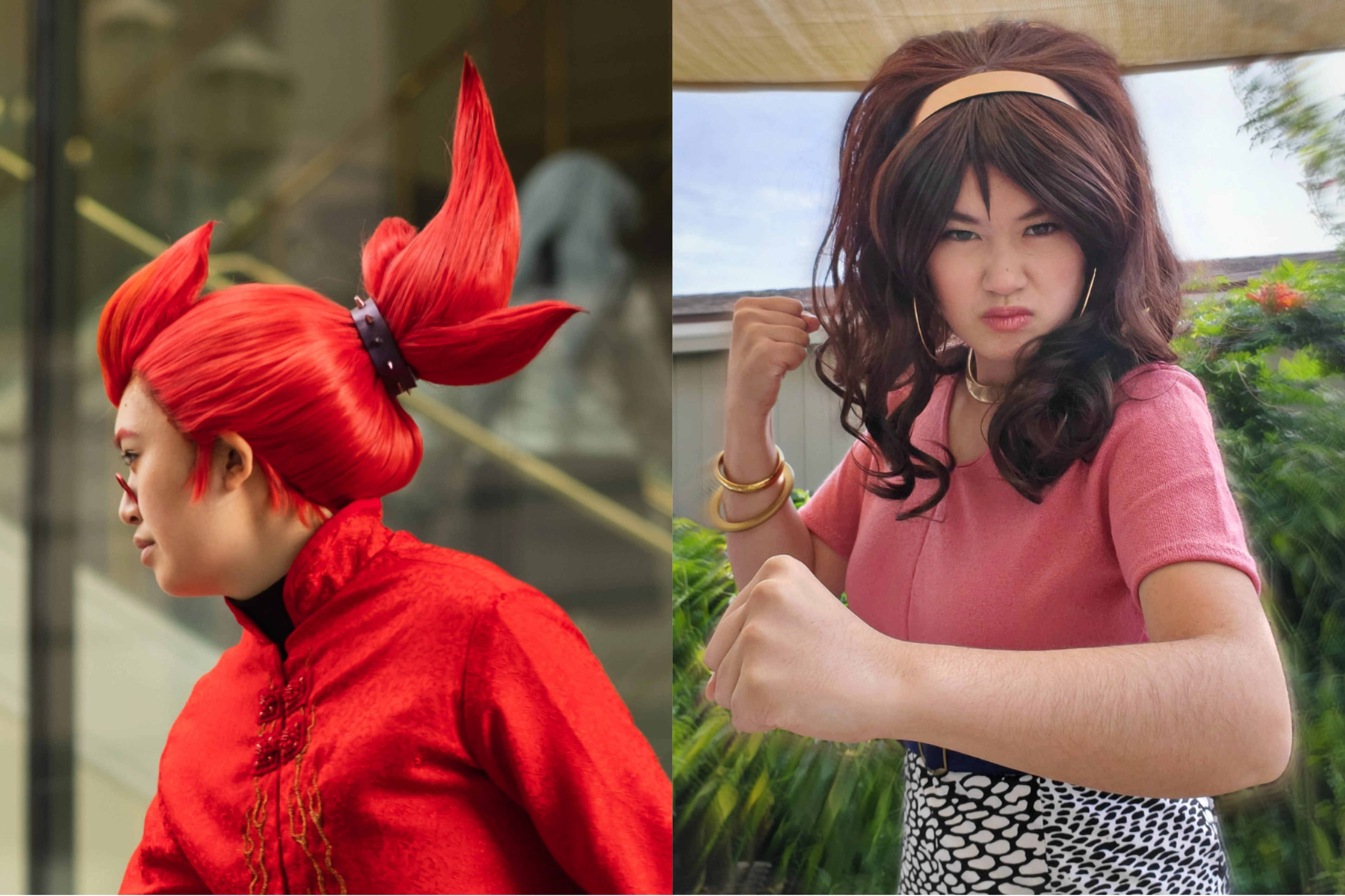
Left: This Red Son wig used a white Calliope wig from Epic Cosplay Wigs, dyed, and styled by modifying Kinpatsu Cosplay's Seraphine wig tutorial Right: I got the wig for Sofia Lee off Mercari and restyled it.
There are so many options for where to buy make-up nowadays. The same make-up regular people wear everyday is often the same type of make-up a cosplayer would use. When that is not the case, theater/stage make-up is likely to be used as they are built for heavy application, have a long wear time, and have many make-up options for creating fictional skin colors and suitable make-up looks to go along with them. For face and body paints in particular, Mehron and Ben Nye are brands I often see used by other cosplayers.
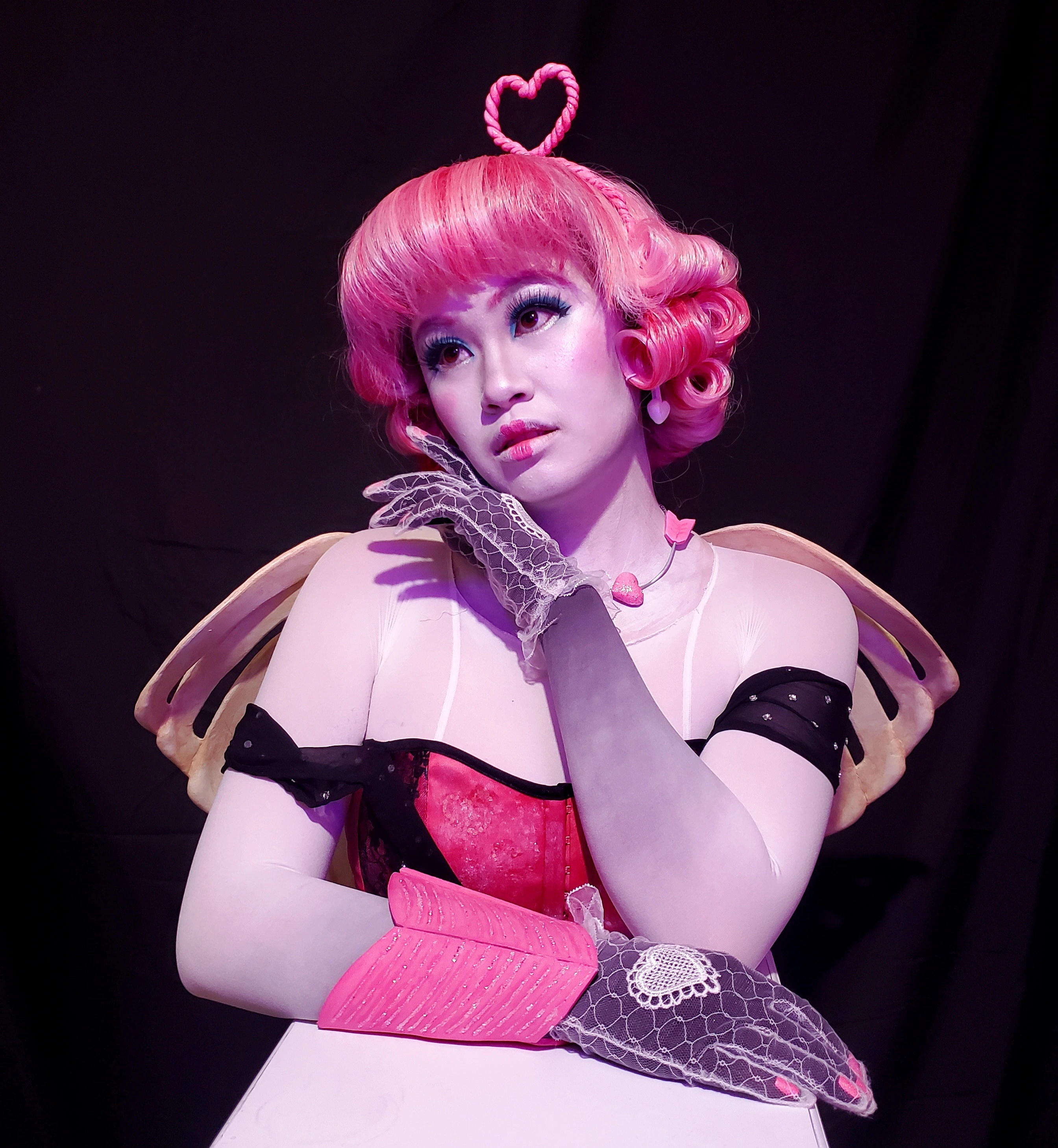
I used creme and water-based face paint for this C.A. Cupid cosplay. I also used massive false lashes and heavily applied the make-up to help exaggerate features and match the loudness of the wig.
Though doing cosplay make-up is different from doing regular make-up as it's usually applied with a heavier hand to help match the face to the dramatic look of wearing an outfit and wig pulled from fiction. There are lots of tutorials online you can find just by searching up "How to do cosplay make-up" and from there, you can narrow down your search based on the look you want to achieve. For making your make-up last longer during a sweaty convention day, it is recommended to use a strong primer and setting method: setting powder, setting spray, or both.
You may have initially thought that I was referencing panties or boxers when I started discussing undergarments, but I promise it's actually a little more complex than that. Undergarments are often not considered by most people to be very important to an outfit but they can really enhance your cosplay by creating a new body silhouette. For example, if you're planning to wear a ballgown and you want the skirt to be very voluminous, petticoats and/or hoopskirts are practically a must.
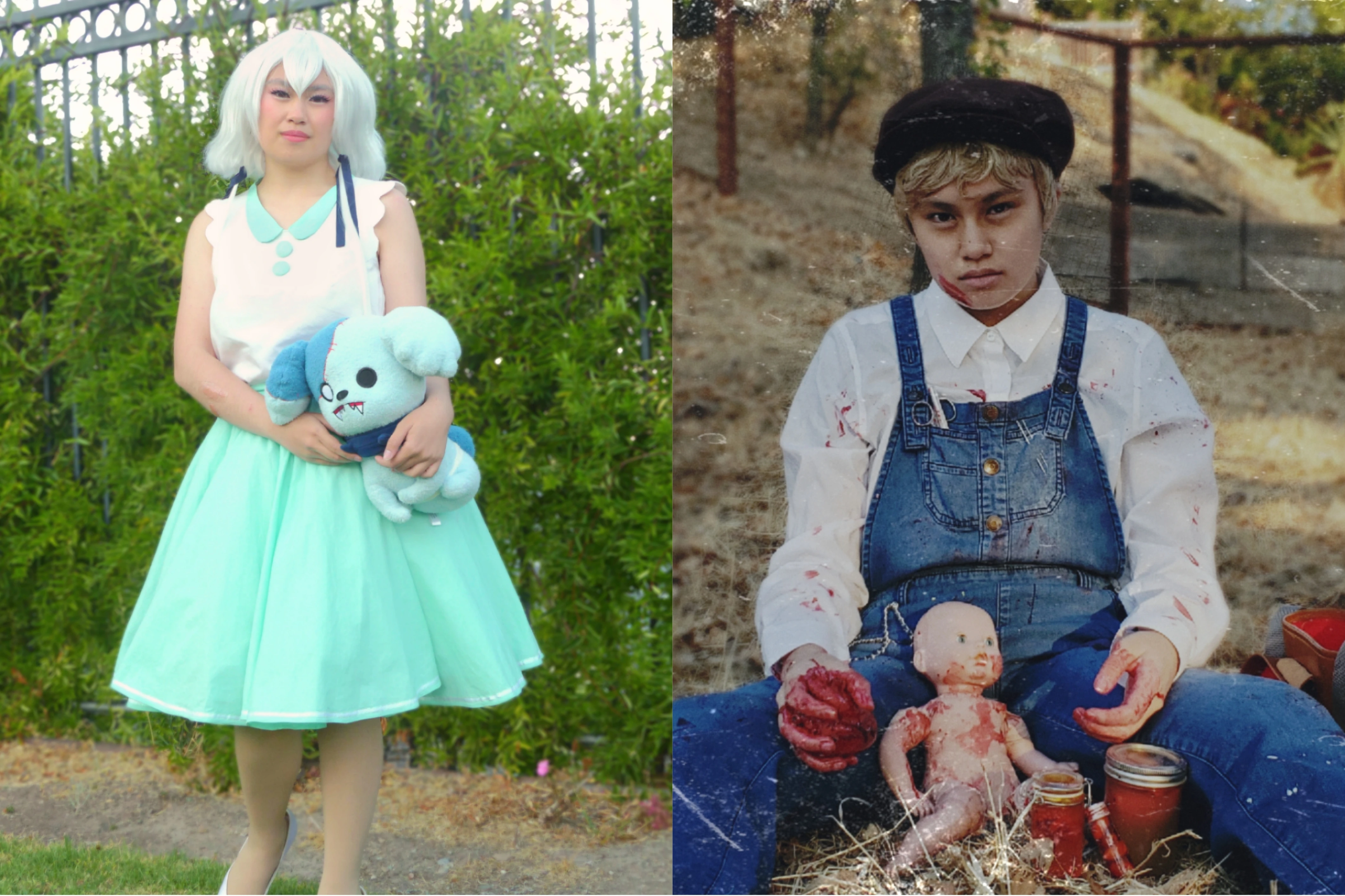
Left: For my Junko Konno from Zombieland Saga cosplay, I used a petticoat to help ad volume and shape to my skirt. Right: I used a chest binder for this Enoch O'Connor from Miss Peregrine's Home for Peculiar Children cosplay.
Other common undergarments used in cosplay include: Chest binders to reduce breast sizeCorsets to support heavy outerwear or provide more definition to your curvesSilicone chest plates to fill out the chest area or simulate muscular pecs and absColored armsocks, tights, or bodysuits to achieve fantasy skin colors
There are a multitude of undergarments that can help you bring a character to life so it can be difficult to find specific stores that only sell them.
But here a few that I'm aware of:Underworks for chest binders and minimizers Snag Tights for colored tightsSpeerise for gloves, leotards, and bodysuitsKinetic Socks for armsocks and tights
For some types of undergarments, there are ways to make your own with tutorials you can find through online searches. But again, these things are not necessary for you to be able to cosplay, especially if they make you uncomfortable.
The outfit is often the "star of the show" whether it's based on clothing elements or a full suit of foam armor. There are many different types and ways to construct clothing and armor so it is difficult to go over them all. It can take a lot of research to first figure out what you need to make, and then, how you're actually going to make it. I often look to YouTube and online search results to find various construction methods based on my needs. To help with the research process, some useful skills to learn for sewing are knowing how fabric names work and learning how to identify and name specific types of garments. Being able to feel and see the texture and drape of a fabric is the best way to learn about fabrics but there are many online fabric stores for sourcing if you don't have access to an in-person store. When buying fabric online, you can often purchase a swatch (a small sample of the fabric) to see how the fabric will really look and behave before you commit to buying full yardage. For armor making, knowing what kind of material you plan to work with is very helpful for finding tutorials. A very common armor making material is EVA foam but I have seen many armor pieces made using 3D printing and sometimes even using cardstock pepakura.
A few places to buy materials:Mood Fabrics for fabric, sewing notions, trimsFabric Wholesale Direct for fabric, sewing notions, trimsWawak for sewing notionsFirst Stop Cosplay for digital sewing patternsCosplay Pros for EVA foam and foam smithing supplies
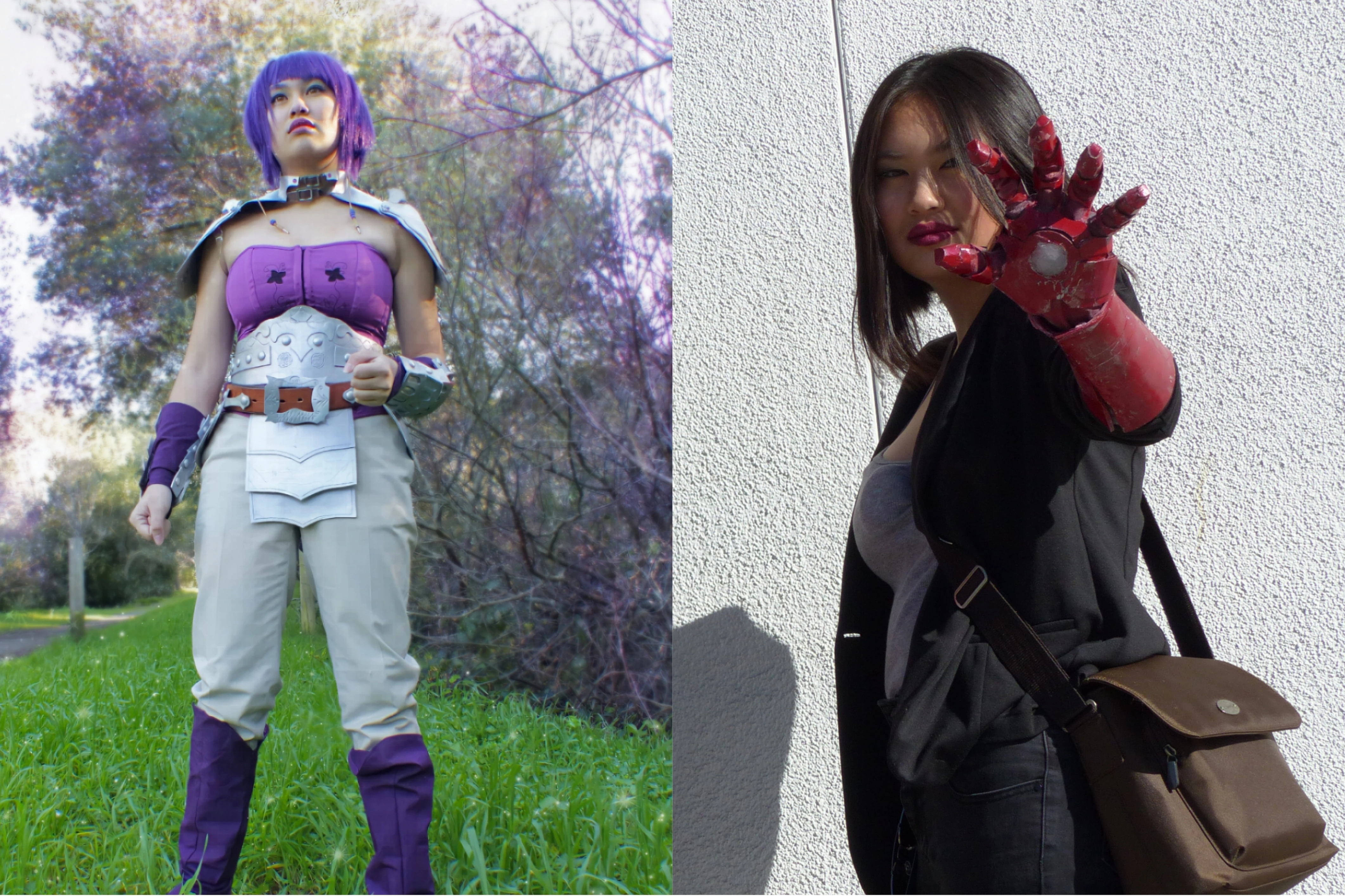
Left: I made this Fantasy AU Kyoka Jirou armoe using EVA foam. Right: My Tony Stark gauntlet was made using pepakura and a cereal box.
Though as you make your outfit, remember to regularly assess if it is comfortable enough for you to wear, it can be put on/taken off by yourself, you can easily maneuver in it, you can easily remove it to go to the bathroom and eat, and it can be removed quickly in case of an emergency. This is why test-wearing a cosplay before you bring it to an event is important. If you have any difficulties when wearing your cosplay but you would still like to wear it as is, you should ask someone to be your handler when you wear the cosplay out.
Shoes can be bought, modified, or made. I often see many cosplayers buying or modifying shoes depending on how unique the design is. Some of the ways shoes can be modified includes painting, creating some kind of cover, or adding 3D elements through sculpting and embellishments. Techniques you would use varies depending on design and, once again, YouTube is where I often go to find tutorials. I have never crafted any shoes from scratch myself, but I have heard from other cosplayers that I Can Make Shoes is a good resource to learn more and get started.
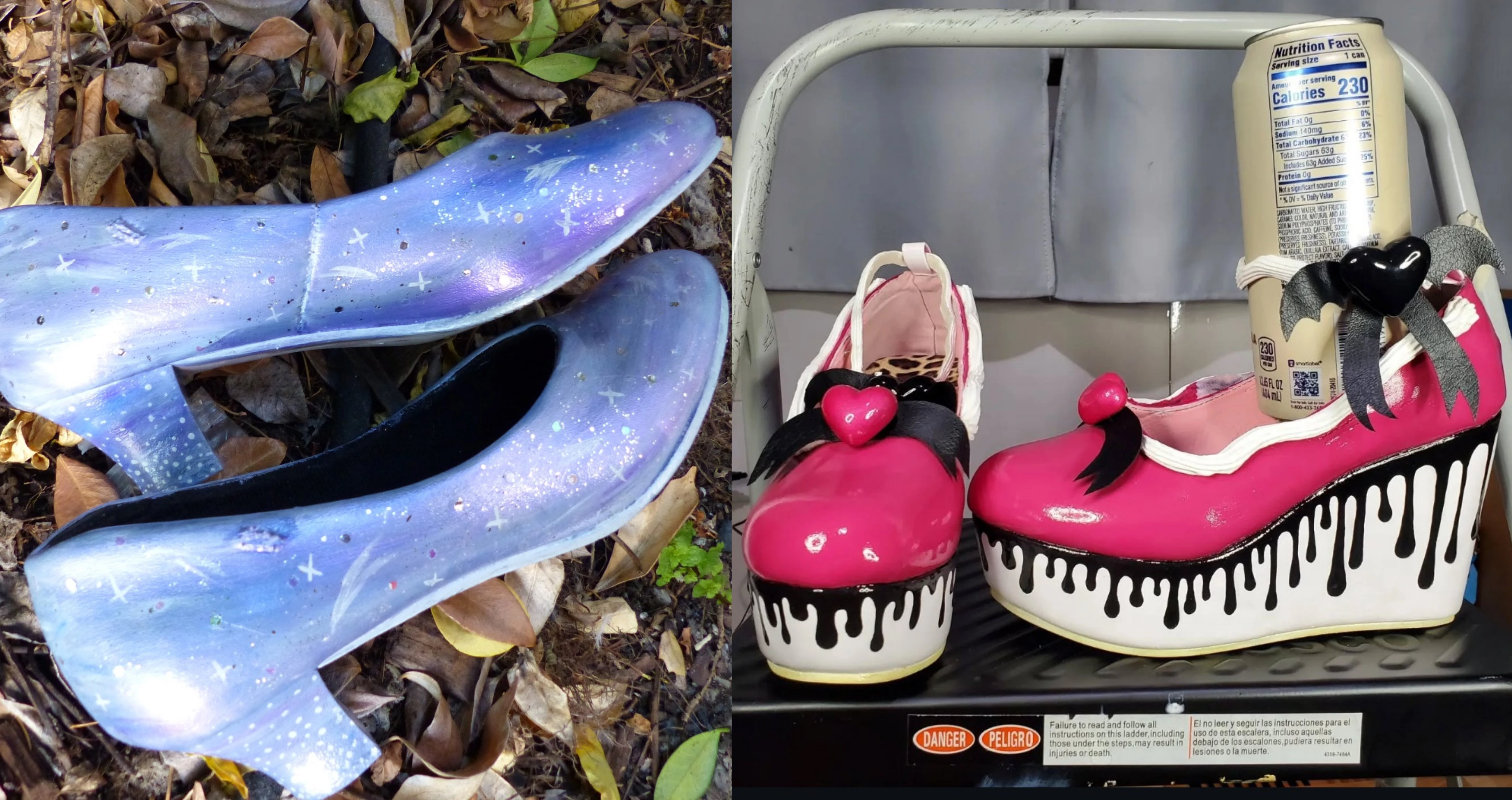
Left: I cut the straps off of some black ballroom dance shoes and painted them for my Elle Wittimer cosplay Right: I was commissioned to recreate Monster High's Draculaura's shoes from the Sweet 1600 themed doll release.
Comfort is again something that must be considered so test wearing shoes you plan to use for a convention day is important. Knowing where and how your feet can become injured from shoes can help you to make the correct modifications needed to prevent them. For example, you can add comfort insoles or bandage your feet where you expect to get blisters. I prefer to just carry my cosplay shoes around with me while I wear regular comfortable shoes. Any time I am asked for a photo or if I need to go to a photo shoot, I just put my cosplay shoes on. Though it helps to wear shoes that are easy to take on and off, and make sure the cosplay shoes are easy to take on and off too.
If the shoes begin to hurt but you have no alternative footwear, it's best to just take a break and take the shoes off to rest your feet before continuing. And it's never worth it to force yourself into shoes that are too small for a cosplay!
Accessories are difficult to cover because there is so much variety in the types of accessories a character may have. Additionally, there is a lot of overlap in accessories and props, but for the sake of this guide, I'm categorizing accessories as non-clothing items that are worn as part of an outfit, while props are objects that are held as part of the overall cosplay. This is because the level of durability, wear, and comfort can differ between something that is worn on the body all day, versus an object that is mostly carried around and held.
You may be sick of me saying this, but comfortability is again something to consider when making any accessory since you might plan to wear it all day. The weight of an accessory can easily be overlooked yet cause discomfort so choosing lightweight construction materials can prevent this issue. It is also important that they are durable since they may be bumped against repeatedly when moving your body or by others in a crowd. They should also be well secured to prevent falling and breaking.
Because there are so many different types of accessories, the best way I've found to find information on how to make specific ones is to do a general search online for how to make that type of item with your desired material. For example, if I wanted help with how to make aviator goggles for my Mei Hatsume cosplay, I would search "How to make EVA foam goggles" to see what pops up and use the results to guide further, more specific searches.
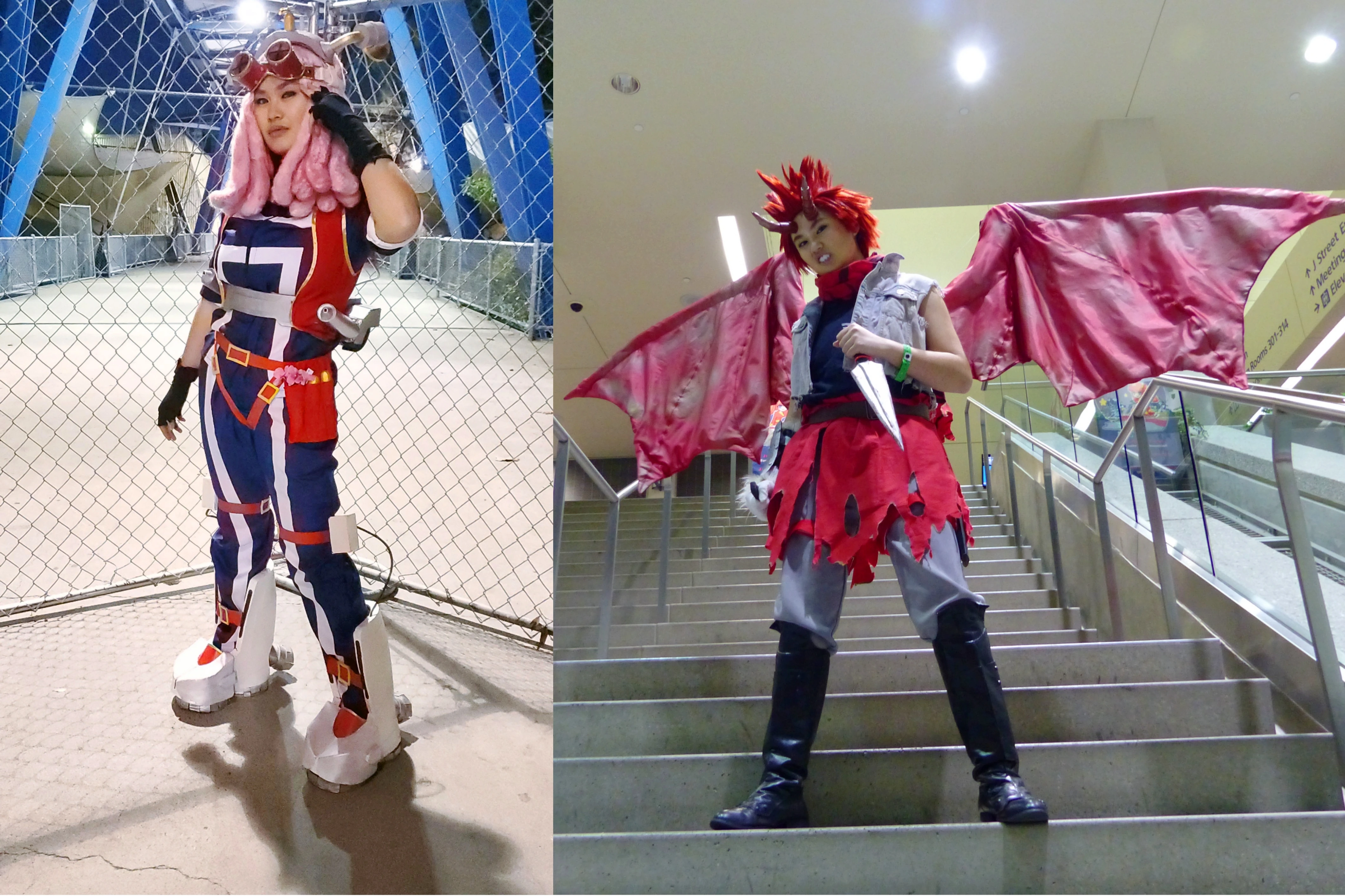
Left: My Mei Hatsume from My Hero Academia props were made of lightweight EVA foam making them easy to wear all day. Right: The wings for my fantasy AU Eijiro Kirishima from My Hero Academia could be broken down. The actual wings could be removed from the harness plate allow which meant I could take a break from the weight without having to take the whole harness off.
Since I am defining props as hand held objects in a cosplay, the characteristics I think are important to pay attention to are durability, stability, and maneuverability. Durability is important as props are often handled with lots of motion which can lead to it hitting other objects as well as being bumped by others in a convention crowd. It's not abnormal to have to make repairs on a cosplay after an event, but creating a prop with durability in mind can increase its longevity. Stability helps make the prop easier to hold and pose with. Having a foam sword that flops around because there are no structural reinforcements can be disappointing in photos and make it easier to damage so doing research on how to stabilize props helps your props look like they came straight out of their fictional world. Being able to easily move a prop for both photos and to avoid hitting people is why maneuverability should be considered during construction. Especially if the prop is large, making sure it's lightweight and even able to break down for travel both makes it easier for you to move your prop around, and helps prevent you from injuring or obstructing others.
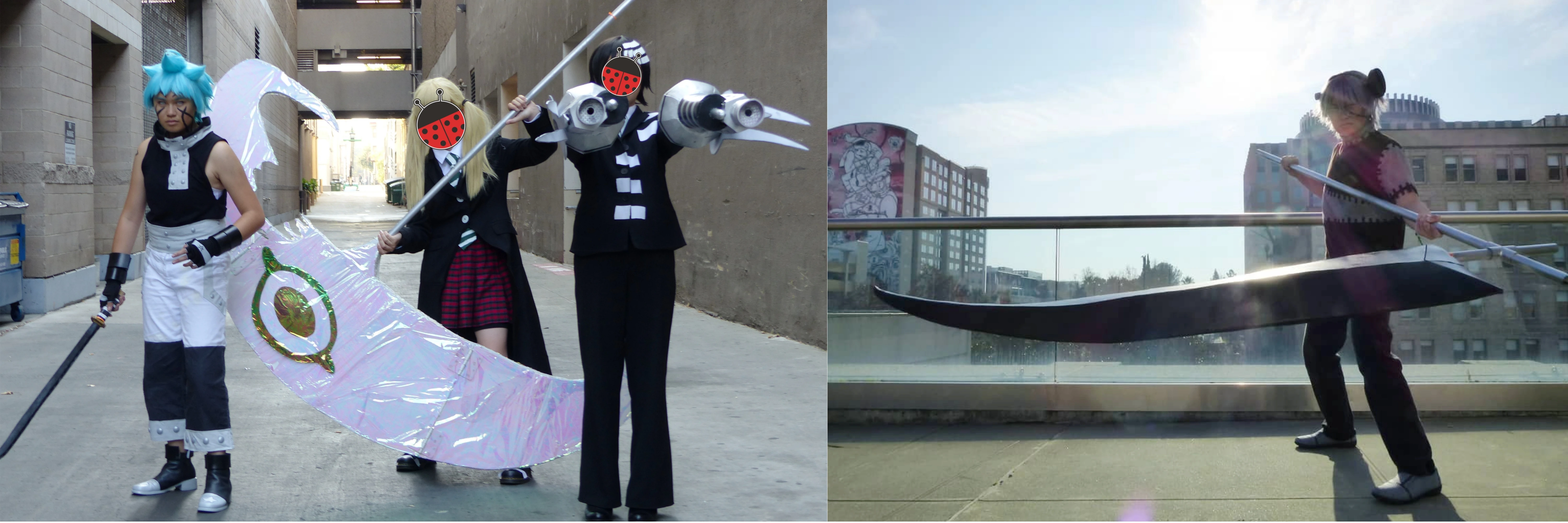
Left: I made all of the props for this group cosplay of Soul Eater characters with their Soul Resonance weapons. Black Star and Death the Kid's weapons were made using EVA foam and foamsmithing techniques while Maka's scythe was made with cardboard, expanding foam spray, and a PVC pipe. Maka's scythe was detachable at the pole and the scythe body could be folded up for transport. Right: Dr.Stein's scythe was also made with EVA foam and PVC pipes. This prop also could be disassenbled at the handling pole.
Conventions also have rules about the kinds of materials a prop can be made of to keep attendees safe. Oftentimes, omitting metal/live steel from a prop or having appropriate markings to show that a prop is not a real weapon are required for bringing the prop into a convention center. These rules are usually outlined somewhere on the convention's website.
Materials frequently used by cosplayers for prop making are safe for most conventions. These include:EVA foamPlastics via 3D printingCardboard
Each of these materials have different properties so the skills and techniques used to work with them varies. But, prop making is not restricted to these materials and methods. Figuring out how to make a prop can require a lot of research outside of the cosplay community, often dipping into other maker hobbies. With time and practice, you will develop a greater mental library of techniques and inspiration that can guide where you need to look.
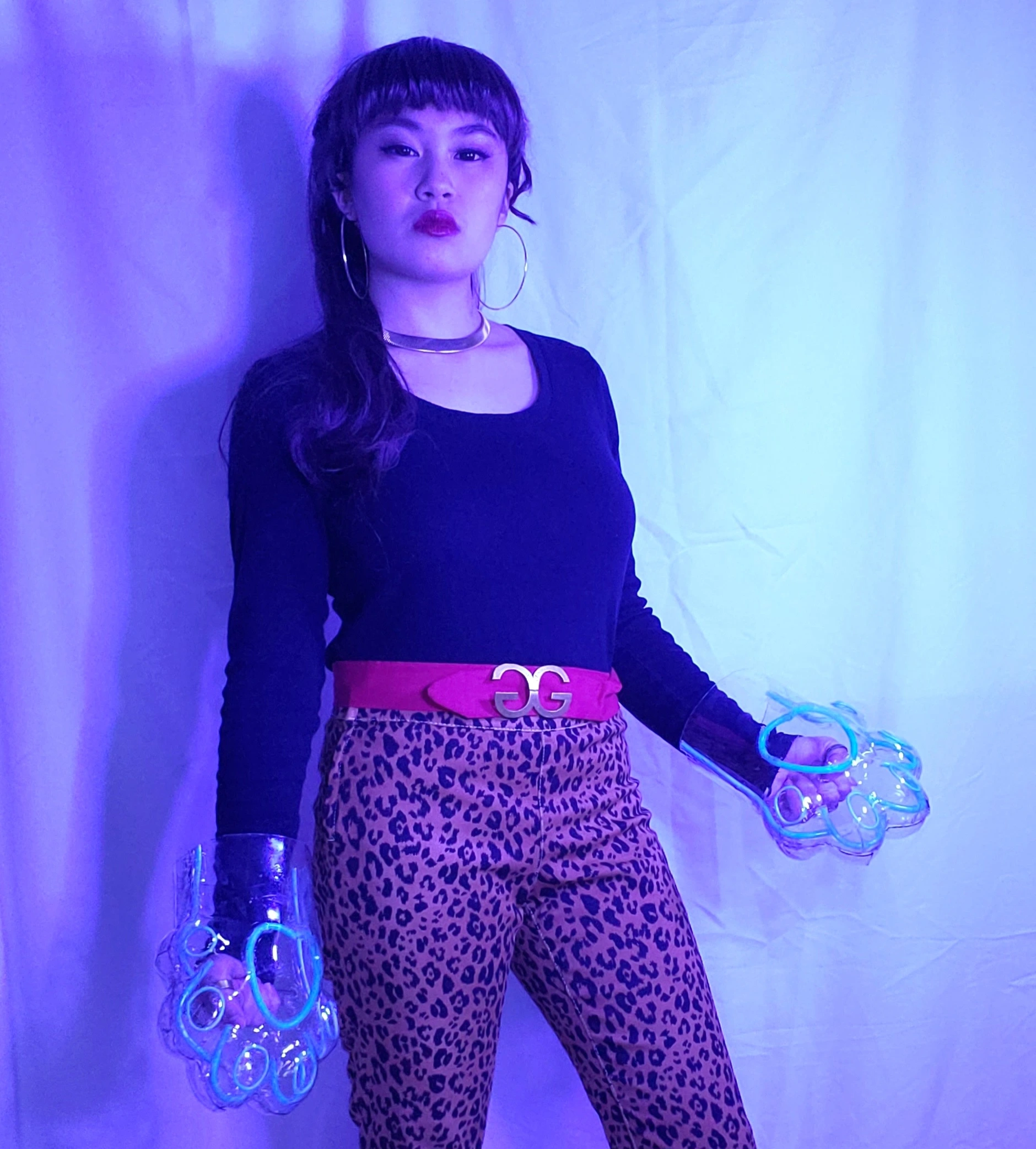
For these "transparent gauntlets", I had to get creative and looked into vacuum forming for materials and techniques to work with clear thermoplastic. I didn't actually do any vacuum forming for these props, but I modified the technique by heat forming around a mold using PETG plastic sheets.
Now that we've overviewed constructing a cosplay, I think it's important to go over the expected behaviors when interacting with others in the community to maintain safety, respect, and inclusivity. Especially if you are new to the community, some of these things might not be immediately apparent.
1. When cosplaying a character that is depicted with natural skin tones (skin tones you would find on real people), you should not lighten or darken your skin tone as part of your cosplayIt is disrespectful because the act of imitating other races' and ethnicities' skin tones has a racist and dehumanizing history. For example in the US, Black and African Americans have been, and still are, systemically oppressed based on the concept of race. Racial identifiers include characteristics like skin color to which dark skin tones have been used to profile and oppress Black and African Americans (along with other groups of people). Minstrelsy is a type of performance that has, often White, actors painting themselves with dark face paint to perpetuate racist stereotypes against Black and African Americans for entertainment. These performances would depict Black and African Americans as subhuman, stupid, etc. and be used to justify racism. The performers got wealth and fame from painting themselves darker and mocking Black people, while actual Black people were subject to daily violence and discrimination. These White minstrel actors were being praised for their performance, while actual Black performers were barred from other performance jobs and looked down upon just for being Black.
Today, many cosplayers of darker skin tones experience racism thrown at them just for having darker skin and cosplaying characters of lighter skin tones. Lighter skin cosplayers don't face this kind of scrutiny when cosplaying darker skin characters. Having this bias towards lighter skin cosplayers and double standards for cosplayers based on their skin tone, makes it even more important to not treat a real physical characteristic, that is used to discriminate against others, as a costume. It upholds an idea that lighter skin is better and takes credit and opportunities away from darker skin cosplayers when there are already few to begin with. Blackfacing and racefacing reduce natural skin color to a costume, when the reality is it is used as a tool of systemic oppression against people around the world.
2. When cosplaying a character with real ethnic physical features that you don't have, you should not modify your face to mimic those features.Why you shouldn't do this is the same as why you shouldn't change your skin tone for cosplay. Mimicking facial features others have been historically, and still are, discriminated against for having, perpetuates dehumanization and makes a caricature of marginalized people.
For example: In early Hollywood, characters of East Asian heritage were depicted by White actors wearing make-up that made the actor look stereotypically "Asian"; such as having exaggeratedly slanted eyes and yellowed skin. Like Blackface, these actors often also portrayed these characters using stereotypes for whatever East Asian country they were supposed to be from. The stereotypes were also frequently negative and used outside of entertainment as part of the racist oppression against East Asians in the US. And although these characters may have been portraying racist stereotypes, White actors taking on these roles contributed to preventing actual East Asian actors from entering Hollywood and reducing the opportunities they could access.
In cosplay, the issue again is the reduction of real human features to parts of a costume. These features almost always have a past and current tie to racism against the ethnic groups these features are commonly found in. By using make-up to recreate exaggerated versions of these characteristics, it is like mocking those who actually have them and and again reducing them to something like a fashionable accessory.
3. If you cosplay a character that wears cultural garments, be sure to do research into the garments to see if they are open to be worn to those outside of the culture. Additionally if the garments are open to others, making cultural garments should be done using the correct methods as respect to the culture that is outside of yours.If these considerations are not taken, you could be contributing to cultural appropriation. Cultural appropriation is when an individual adopts parts of a culture that is not their own, in a way that is disrespectful and/or without credit and diminishes the culture to a trend or costume. There are many garments, accessories, hairstyles, etc. that have significant cultural value for those in the community and are restricted to those within the community due to cultural history. By taking those pieces and misrepresenting them, it is disrespecting the culture and reducing a part of real people's culture to a costume which can be dehumanizing.
4. Cosplay is not consent. Do not touch cosplayers, their outfits, or their props without explicit consent. Do not photograph or record others without explicit consentTouching someone without consent or inappropriately interacting with a cosplayer without their permission is harassment. It does not matter what they are wearing or who they are cosplaying, cosplayers are real people, not the character they are dressed as, and all people should not receive unwarranted contact or inappropriate interactions without consent. This also applies to the cosplays themselves. Cosplays are someone's art and handling them without permission can damage pieces and is plain disrespectful of that person's space and property.
Taking photos of others without consent violates someone's autonomy and is simply weird. Most cosplayers say yes to photos when asked and you'll get a much better photo if you ask. It is understandable to get shots of people in the background of a video or photo, but directly capturing someone's image without them knowing is creepy and should not be done.
5. Credit your photographers and commissioners.Give credit where credit is due! Giving credit is basic respect to those who are contributing their skills and art to yours. The individuals that participated in your cosplay and helped you showcase it should be promoted and have their names attached to what is also their work. This can be done by tagging their accounts on your social media post, sharing the link to their storefront in a caption, etc.
6. You and others have the right to decline interactions. You and others are allowed to say no and have that no be respected.Not everyone wants to interact and sometimes people need a break. Having people come up to you to ask for a photo when you're mid bite of the first meal of the con day and half of your cosplay is off can be a bit annoying. It's okay to decline and you shouldn't feel bad for doing so. If you're the one who is declined an interaction, you should respect that decision and not pressure the other person into following through with your request. There is no obligation between you and a stranger to interact in any way.
7. Anyone can cosplay and bullying or harassment of others because they aren't "canon" is unacceptable.You do not have to look like the character you want to cosplay. The goal of cosplay should be to have fun dressing up and sharing your love for fandom. I'm aware that being "canon" is a goal for many cosplayers, but it really should not hold importance over having fun and being comfortable in your cosplays. Cosplayers are dressing up as fictional characters that often don't even follow the same laws of physics that the real world does. It is ridiculous to emphasize "canon" under these conditions and it should never matter for determining the worth of and way you treat others.


