Crocroach cosplays. welcome to the bug talent show

The Brief History of Cosplay

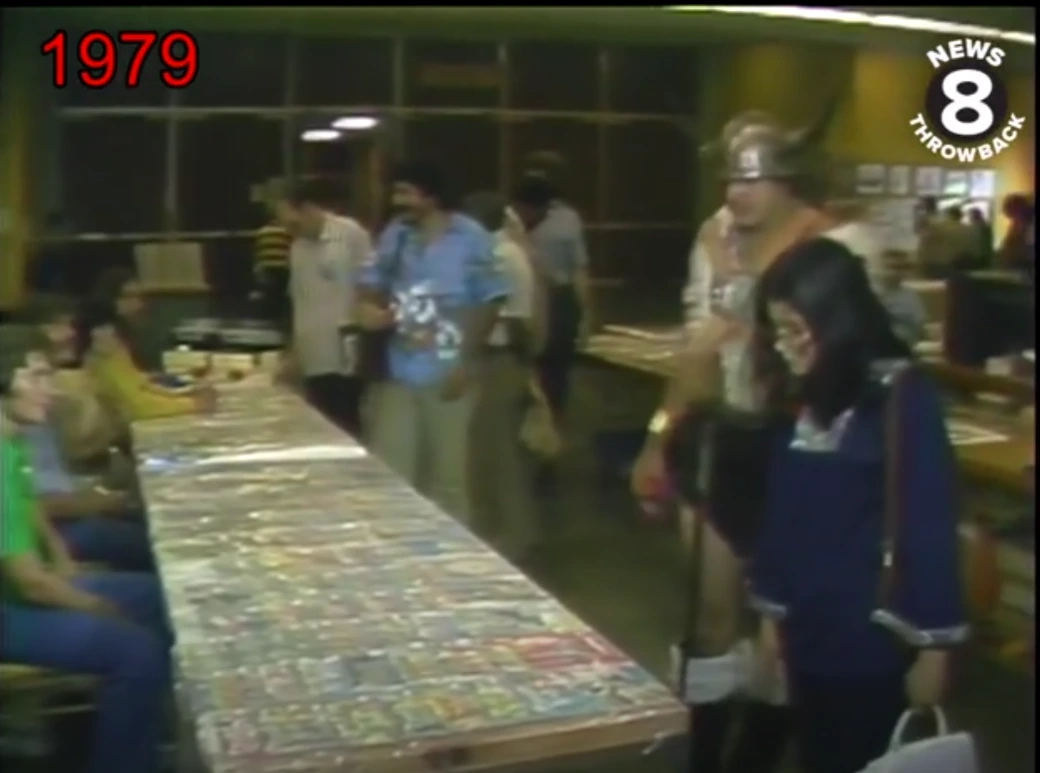
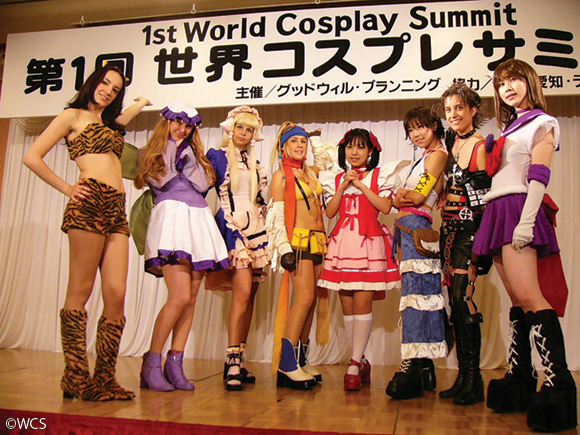
Looking into the history of cosplay and how it has developed over time to the form we see today, I found two books that examine cosplay under a scholarly lens and include their findings on the origins and development of cosplay. Cosplay : The fictional mode of existence by Frenchy Lunning explores cosplay’s history starting with the rise of “a mass society” starting in the late nineteenth century (p.34). On the other hand, Planet Cosplay: Costume Play, Identity and Global Fandom by Paul Mountfort, Anne Peirson-Smith and Adam Geczy begin their recount examining the debate on where the art originated: Japan or the United States of America (p. 4). Lunning (2022) describes the first “reported incident of cosplay” was from a 1908 masquerade event in Monroe, Washington (p.36) while Mountfort et al. (2018) “locate cosplay’s origins more contextually in the emergence of media and fan cultures in the latter half of the twentieth century” as the basis for the beginning of their research (p.25). Even though Lunning started with the description of a 1900’s example of costuming for a public event, both sources agree that science fiction conferences of the mid 20th century and the rise of Star Trek and fandom were what formulated the basis for modern cosplay. Continuing their descriptions of cosplay history, Lunning’s retelling is in greater depth than what is found in Planet Cosplay, but overall, the important moments in cosplay’s move closer to the mainstream are mainly agreed upon in both books. These crucial moments for cosplay’s rise include the coining of the term “cosplay” by Nobuyuki Takahashi in the Japanese magazine My Anime’s 1983 edition, the large influence of Japanese animation and comics on increasing participation both in the “west” and in Japan, and growing numbers of anime and comic conventions in the United States in the 1980s and 1990s. After this era, Cosplay describes a boom in conventions is seen from the 1990s to 2000s due to the rise of digital communication and Planet Cosplay notes “by the dawn of the twenty-first century a convergence culture in which various media overlap and distribute characters and their storyworlds across once discrete boundaries was in full swing” describing new ways fans interact with the medium and the media they pull inspiration from. Both of these factors are heavily seen in the modern cosplay scene and the description of how they came to be is important to understand the context in which the community operates today. As for the psychological motives behind why one would cosplay, I found two sources examining cosplay and mental health with one having a sample from United Kingdom residents and the other sampled from the Philippines. Both also selected for only adult age individuals facing mental health struggles. I chose to use papers that specifically connect participation in cosplay with affecting mental health in the participants for this project as I believe these studies will provide the best oversight into why people choose to cosplay and more details on personal impact, whether those are positive or negative. The first source is a PHD thesis by Bethan Ann Yorath titled, Cosplay and Mental Health: A thematic analysis. Their research was conducted through a total of eight interviews where three main themes were covered: “cosplay as a creative outlet, social relationships, and the psychological impact of roleplaying a character” (Yorath, 2022). Yorath describes the method of interview as “semi-structured” and there was a mix of questions pertaining to the topic and questions that “allowed the participant to explain their experience without direction”. This openness likely contributed to the resulting data forming its own themes that Yorath described as “Motivation for Cosplaying” and “A More Confident and Empowered Me.” Under “Motivation for Cosplaying,” the paper states that the main reasons interviewees entered cosplay was for fun and to enjoy themselves. Secondary to that was “showcasing their art and expressing their fashion” and Yourath notes that “There was also a sense that the continued motivation to cosplay had links to the constant momentum cosplay offers” (p.90-91) in reference to deadlines created by events such as conventions. In the section “A More Confident and Empowered Me,” the effects of cosplay on their mental wellbeing were described to “improve their confidence, mental wellbeing, and socialising” (p.91) with descriptions of ways they learned to deal with mental health issues and facing new opportunities through cosplay. The increased confidence that the cosplayers detailed was also stated to be applicable and present in their daily lives. Another interesting response was how the greater likelihood to receive positive feedback and attention from cosplaying at conventions and joining competition spaces improved their daily confidence and self image (p. 93). The last point I took from this paper was the way in which the crafting aspect of cosplay impacted the participants. They spoke about “how it can be therapeutic, and gives them something to focus on instead of worrying or ruminating” and “provides a huge sense of accomplishment, achievement and pride” (p.24). The paper by Beltran et al. (2025), Cosplay and Mental Health: Exploring How Cosplaying Promotes Positive Mental Health, focused on Filipino cosplayers in a sample size of eight. It had similar findings to Yorath’s thesis; “Intrinsically, they experience personal fulfillment and self-expression, while extrinsically, they gain creative outlets, social opportunities, and peer validation” (Abstract). Themes to categorize Beltran et al’s (2025) data “Factors Driving Cosplay Involvement” include “Internal/Intrinsic” and “External/Extrinsic.” A subcategory of “Intrinsic/Internal” included enjoyment in which participants placed importance on how cosplay was not just about the costume, but also about the enjoyment gained from the entire experience and community of cosplay (3. Results) which is similar to the importance of fun in participants of Yorath’s thesis. Character appreciation was the other subcategory which was not included in Yorath’s findings. Beltran et al. found that character appreciation was a motive and an achievement for cosplay as “respect and celebration for the character [that] has impacted the participants” (3. Results). The “External/Extrinsic” category had the most similarities to what was found in Yorath’s research as the subcategories include “Creative Outlet”, “Opportunities”, and ”Validoation/Approval.” The ideas of improving self image, socialization skills, building community, and utilizing crafting as a physical outlet for creativity and mental troubles are major points in these subcategories and were the most shared findings between the papers. Being able to find two different papers that examined the effects of cosplay on mental health in a positive light in two different demographics is helpful in putting into words what I anecdotally can say about the participants of cosplay, and provides scientific backing to the ways in which cosplay can be beneficial for mental health.